South Africa increases tariffs on wide range of steel products to WTO bound rate

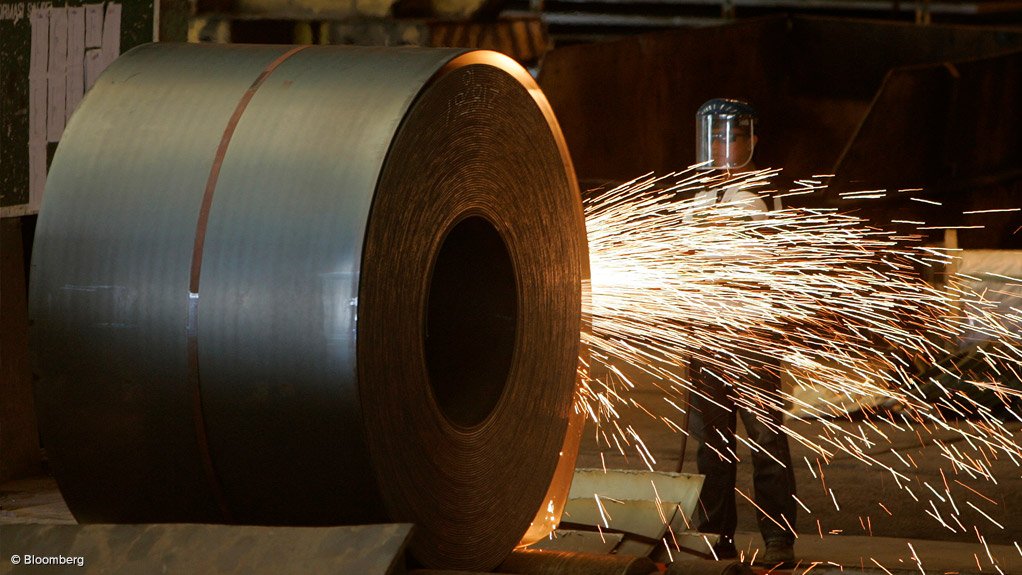


South Africa has officially raised import protection across a wide range of upstream and downstream steel products by between 10% and 30% – rates that are in line with the World Trade Organisation (WTO) ‘bound rate’, or the legally permitted maximum import tariff rate that can be applied by a member country.
The adjustments, which have been signalled for some time, were published in the Government Gazette by the South African Revenue Service on May 15 and signed by Finance Minister Enoch Godongwana.
The intervention follows a far-reaching review of South Africa’s steel tariffs undertaken by the International Trade Administration Commission of South Africa (Itac) in line with a 2024 directive issued by Trade, Industry and Competition Minister Parks Tau.
The directive mandated a comprehensive investigation into the tariff structure of steel products under chapters 72, 73, 82, and 83 of the tariff book, which have been estimated to involve yearly imports with a combined value of about R66-billion.
The amendments to the tariff schedule have been made in terms of Section 48 of the Customs and Excise Act and cover imports arising from countries that do not have a trade deal with South Africa.
It thus excludes steel imports from the UK, the EU, as well as countries that have signed up to the African Continental Free Trade Area Agreement and the European Free Trade Association.
An analysis published by XA Global Trade Advisors immediately after the publication of the Gazette notice lists the new general rates of duty as including:
- 10% on a wide range of flat-rolled, electrical and alloy steel products;
- 15% on welded and seamless tubes and pipes, fittings, tanks and drums, wire ropes, fencing, chain, screws, staples and other downstream articles;
- 20% on hand tools, saws, wrenches, hammers, pliers, screwdrivers, interchangeable tooling and household knives; and
- 30% on select fittings, washers and steel baths.
In an interview with Engineering News, Itac chief commissioner Ayabonga Cawe highlighted that the amendments to the tariff schedule had been published alongside rebate measures for which importers could apply using Itac’s standard rebate adjudication process.
Cawe said the decision to offer rebates on products not currently manufactured in South Africa rather than implementing zero duties was because many of the products had been produced locally previously.
“A key thing that was reinforced by this review was the extent of product coverage that we've lost in the last few decades as a country,” Cawe said, adding that one of the goals was to create the space for the resumption of production.
XA Global Trade Advisors highlighted that a full rebate could be sought for products such as semi-finished billets, aluminium-zinc coated coil, H-sections, wire rod, rails, as well as seamless and galvanised tubes, provided the products were not produced locally.
However, some of the rebates were also limited to defined end-uses, such as hot-plate stoves, mining-core trays, domestic fridges and freezers, insulated panels, steel garage doors, railway turnouts, port infrastructure, water infrastructure, fire systems, and pipeline assembly.
GLOBAL CONTEXT
The move to raise tariffs, Cawe added, also had to be considered within a global context where many of South Africa’s trading partners were introducing protection.
Some countries, such as the US, were doing so by invoking national security as a rationale, while others, including the EU, were using legal mechanisms in the WTO, such as Article 28, to modify or withdraw previously agreed-upon tariff concessions.
“It’s quite clear that the world is becoming a lot more protectionist than it might have been two decades ago, and you can either lament that, or you can see to what extent you navigate it with the tools you have at your disposal in a manner that protects the industrial base.”
He acknowledged, however, that tariffs by their nature had price-raising effects and said that Itac would review the effectiveness of the protection granted on steel products in the coming three years.
“I think there is a signal here that there is an inclination on the part of the South African authorities to, on the balance of evidence, respond to import competition … not only to give people protective cover, but to do so in a manner that buys the space that is necessary to invest in capability improvement and industrial upgrading.”
It also signalled that South Africa had become more active and assertive in the use of trade policy to support its industrialisation ambitions. However, he stressed that tariff decisions would be made on a case-by-case basis.
A value-chain approach would also be considered, whereby tariff policy is implemented in a sequential manner to take account of a sector’s capability and capacity to produce certain products locally.
Using batteries as an example, he said that the intention could be to use tariffs to send the “right signals” to facilitate a transition from assembly to higher value-added activities over time. This, against the backdrop of another large review in relation to renewable-energy and battery components.
Cawe also responded to ongoing concern being expressed about the time it was taking for South Africa to make tariff decisions, saying that the frustration being expressed by some applicants was understandable.
However, he also defended following an evidence-based process rather than one whereby the decisions were taken by a government Minister in the absence of a body such as Itac.
“Yes, we must try and get to decisions quicker. The markets, and of course, the economic situation facing many firms moves with much greater speed than we do,” Cawe admitted, while indicating that it may be necessary to consider the imposition of provisional duties in certain circumstances while investigations were carried out.
However, he believes a balanced approach is needed, whereby the value of conducting deliberative investigations and public consultations is recognised alongside the desire for greater speed of decision-making.
Article Enquiry
Email Article
Save Article
Feedback
To advertise email advertising@creamermedia.co.za or click here
Research Reports

Projects


Latest Multimedia

Latest News

Showroom

Virtual Gas Network supplies compressed natural gas via a virtual gas distribution network.
VISIT SHOWROOM


Announcements
What's On
Subscribe to improve your user experience...
Option 1 (equivalent of R125 a month):
Receive a weekly copy of Creamer Media's Engineering News & Mining Weekly magazine
(print copy for those in South Africa and e-magazine for those outside of South Africa)
Receive daily email newsletters
Access to full search results
Access archive of magazine back copies
Access to Projects in Progress
Access to ONE Research Report of your choice in PDF format
Option 2 (equivalent of R375 a month):
All benefits from Option 1
PLUS
Access to Creamer Media's Research Channel Africa for ALL Research Reports, in PDF format, on various industrial and mining sectors
including Electricity; Water; Energy Transition; Hydrogen; Roads, Rail and Ports; Coal; Gold; Platinum; Battery Metals; etc.
Already a subscriber?
Forgotten your password?
Receive weekly copy of Creamer Media's Engineering News & Mining Weekly magazine (print copy for those in South Africa and e-magazine for those outside of South Africa)
➕
Recieve daily email newsletters
➕
Access to full search results
➕
Access archive of magazine back copies
➕
Access to Projects in Progress
➕
Access to ONE Research Report of your choice in PDF format
RESEARCH CHANNEL AFRICA
R4500 (equivalent of R375 a month)
SUBSCRIBEAll benefits from Option 1
➕
Access to Creamer Media's Research Channel Africa for ALL Research Reports on various industrial and mining sectors, in PDF format, including on:
Electricity
➕
Water
➕
Energy Transition
➕
Hydrogen
➕
Roads, Rail and Ports
➕
Coal
➕
Gold
➕
Platinum
➕
Battery Metals
➕
etc.
Receive all benefits from Option 1 or Option 2 delivered to numerous people at your company
➕
Multiple User names and Passwords for simultaneous log-ins
➕
Intranet integration access to all in your organisation